
Why Our Revolutionary Organization Matters
Why Being a Revolutionary International Communist Is Neither Idealistic nor Abstract

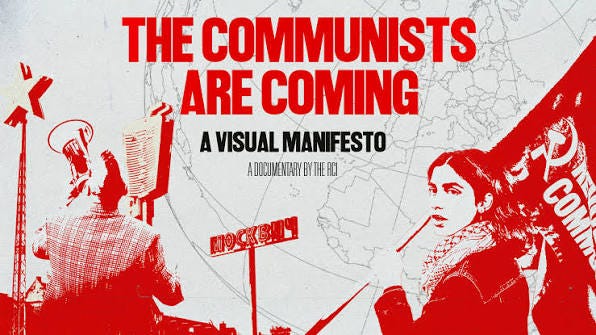
As I called this the European Condition it is ever important to release this article. This article is not primarily an analysis of the European situation. While the conditions facing workers in Europe are important, they can only be understood as part of the global development of capitalism. Marxism begins from the recognition that capitalism is an international system, and that its crises, contradictions, and class struggles transcend national borders. For that reason, revolutionary international communists reject the illusion that socialism can be built within a single country or that lasting solutions can be found through purely national politics. The struggle is international because capitalism itself is international, and it is from this material reality—not from abstract ideals—that revolutionary internationalism arises. Let’s start.
One of the most confusing aspects of modern politics is the sheer number of people who call themselves “Marxists” while advocating fundamentally different political conclusions. Today the label has become so diluted that it often obscures more than it clarifies. Economists, academics, reformists, YouTube commentators, parliamentarians, and activists may all invoke Marx, yet arrive at entirely different strategies for changing society.
For revolutionary international communists, this raises an essential question: what actually defines a Marxist?
Marxism is not simply an intellectual framework or a critique of capitalism. It is a revolutionary method rooted in dialectical materialism, class struggle, and the self-emancipation of the working class through collective organization. Marxism is not merely about interpreting capitalism – it is about overthrowing it.
This is why revolutionary organization matters.
Many contemporary thinkers use elements of Marxist analysis while remaining politically detached from the organized struggle of the working class. Academic figures may critique neoliberalism, financial capitalism, or inequality, and some of their observations can indeed be useful. Marxists should not reject analysis simply because it comes from outside their own tendency.
However, from a revolutionary standpoint, there is a fundamental distinction between using aspects of Marxist theory and consistently applying the Marxist method to its revolutionary conclusions.
Marxism is not simply a set of economic insights. It is a coherent worldview grounded in dialectics and historical materialism. When followed consistently, it leads toward the necessity of class struggle, internationalism, and the organized seizure of economic and political power by the working class.
This is where many self-described Marxists stop short.
Revolutionary International Communists argue that intellectual criticism alone is insufficient if it is disconnected from the world-wide organization and struggle. Without participation in the organized movement of the working class, radical theory risks becoming academic commentary rather than a material force capable of transforming society.
This contradiction becomes particularly visible in movements that attempt to reform capitalism without confronting the structures of class power directly.
Many left-wing reformist projects emerge during periods of crisis promising radical change, only to retreat once they encounter pressure from capital, the state, or international institutions. Marxists have observed this repeatedly throughout history.
For example, movements surrounding reformist left parties or coalitions often attract sincere activists who want social justice, environmental reform, or economic redistribution. Yet without a revolutionary strategy rooted in working-class power, these movements tend to adapt themselves to the existing system rather than overturn it.
This is one reason revolutionary international communists remain skeptical of projects centered primarily on parliamentary reform, including movements adjacent to green liberalism or European reformism. Their critique is not moralistic; it is structural. The capitalist state cannot simply be “managed differently” in the long term without confronting the interests of the ruling class itself.
Even where reforms are achieved, capitalism reproduces inequality through exploitation on a global scale. Temporary concessions can improve living standards for some layers of society, but they do not abolish the underlying contradictions of the system.
Why Revolutionary Theory Matters
This is why revolutionaries place such emphasis on theory.
When Vladimir Lenin wrote that “without revolutionary theory there can be no revolutionary movement,” he was not arguing for intellectual elitism. He meant that without a politically educated layer of workers capable of understanding capitalism scientifically, movements will repeatedly fall into reformism, nationalism, opportunism, or despair.
Dialectical materialism is not abstract philosophy for its own sake. It is a method for understanding how societies change through contradictions.
Capitalism constantly generates crises: economic instability, imperialist conflict, ecological destruction, alienation, and political polarization. These contradictions intensify over time. Revolutionary theory helps workers understand that these crises are not accidental failures of policy, but structural outcomes of capitalism itself.
Without this understanding, frustration can easily be redirected into reactionary politics.
Periods of instability often produce growing support for right-wing nationalism, racism, chauvinism, and authoritarian politics. This should not surprise Marxists.
In times of crisis, people search for explanations and solutions. The far right offers emotionally simple answers: blame immigrants, minorities, foreign powers, or cultural enemies. These narratives provide identity and certainty during periods of social disintegration.
Marxists recognize that sections of the working class can develop reactionary ideas under capitalism. But revolutionary socialists reject the liberal conclusion that such workers are permanently lost or inherently backward.
Instead, Marxists argue that consciousness changes through struggle and experience.
The task of revolutionaries is not to moralistically condemn workers who have adopted reactionary ideas, but to patiently explain the real source of exploitation and social crisis: capitalism and the ruling class. This requires organization, education, and political discipline.
At the same time, revolutionary organizations must defend themselves politically against chauvinism, opportunism, and destructive behavior. A revolutionary party cannot survive without internal debate, democratic accountability, and theoretical clarity. And need to fight any form of dogmatism or sectarianism, which many so called degenerate communists default to.
A genuine revolutionary organization is not merely an activist network or electoral machine. Ideally, it functions as a collective school of political development.
Through study, debate, criticism, and participation in workers’ struggles, members sharpen both their understanding of society and their ability to intervene within it. Marxist theory becomes something living rather than academic.
This process is deeply humbling. Serious Marxists do not believe they “know everything.” On the contrary, dialectical materialism requires continuous reassessment of reality, constant study of ever-changing material conditions, and willingness to criticize one’s own mistakes.
The purpose of theory is not to produce intellectual superiority. It is to prepare the working class to act consciously and collectively.
Historical Possibility and Revolutionary Optimism
Revolutionary Marxists remain convinced that capitalism creates the very conditions for its own overthrow, but these ever emergin conditions will not be overthrown by themselves.
History demonstrates that revolutionary consciousness can develop rapidly during periods of crisis. Between 1905 and 1917, revolutionary movements in the Russian Empire grew from relatively small organizations into mass forces capable of reshaping world history despite widespread poverty and illiteracy.
Today, the global working class is vastly larger, more interconnected, and more technologically linked than it was a century ago. At the same time, capitalism faces intensifying crises across economics, climate, war, and political legitimacy.
For Marxists, this does not guarantee victory. But it demonstrates that revolutionary transformation is materially possible.
As communist Antonio Gramsci famously observed:
“The old world is dying, and the new world struggles to be born: now is the time of monsters.”
That contradiction defines the present era. Across the world, millions of people increasingly sense that existing institutions no longer function in their interests. Revolutionary organization seeks to transform that diffuse dissatisfaction into conscious political struggle.
Contrary to popular caricatures, revolutionary politics is not built on impatience or adventurism. Serious organizing is often slow, disciplined, and deeply patient.
People rarely arrive at revolutionary conclusions immediately. Many pass through liberalism, reformism, environmentalism, nationalism, or social democracy before becoming convinced of the limits of capitalism itself.
For this reason, joining a revolutionary organization should never be treated lightly. People should study, attend meetings, ask difficult questions, debate openly, and critically examine both the organization and its political tradition.
In many cases, the most thoughtful and critical individuals become the most committed organizers precisely because they did not join impulsively.
Revolutionary Marxism does not ask for blind faith. It asks people to study reality seriously, examine history and science honestly, and participate consciously in the struggle to transform society.